
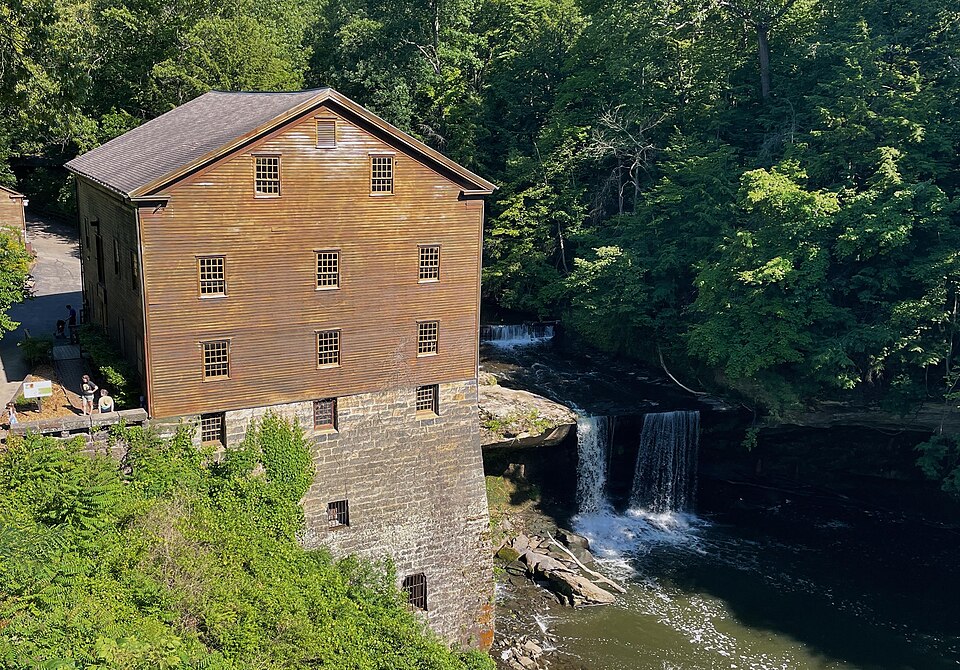
Youngstown is a city in the U.S. state of Ohio. It lies along the Mahoning River in Northeast Ohio, predominantly within Mahoning County, of which it is the county seat. The population was 60,068 at the 2020 census (estimated at 58,832 in 2025), making Youngstown the eleventh most populous city in Ohio. Its metropolitan area, known as the Mahoning Valley, had an estimated 426,086 residents in 2024.
At a Glance
- Counties: Mahoning County and Trumbull County
- County seat of Mahoning County
- State: Ohio
History of Youngstown
Youngstown was named for New York native John Young, who surveyed the area in 1796 and settled there soon afterward. On February 9, 1797, Young purchased the township of 15,560 acres (6,300 ha) from the Western Reserve Land Company for $16,085. The 1797 establishment of Youngstown was officially recorded on August 19, 1802.
The area that includes present day Youngstown was part of the Connecticut Western Reserve, a section of the Northwest Territory that Connecticut initially did not cede to the federal government. Upon cession, Connecticut retained the title to the land in the Western Reserve, which it sold to the Connecticut Land Company for $1,200,000. While many of the area’s early settlers came from Connecticut, Youngstown attracted many Scots Irish settlers from neighboring Pennsylvania. The first European Americans to settle permanently in the area were Pittsburgh native James Hillman and wife Catherine Dougherty. By 1798, Youngstown was the home of several families who were concentrated near where Mill Creek meets the Mahoning River. Boardman Township was founded in 1798 by Elijah Boardman, a member of the Connecticut Land Company. Also founded in 1798 was Austintown by John McCollum who was a settler from New Jersey.
Text adapted from the Wikipedia article Youngstown, Ohio, available under the CC BY-SA 4.0 license.