
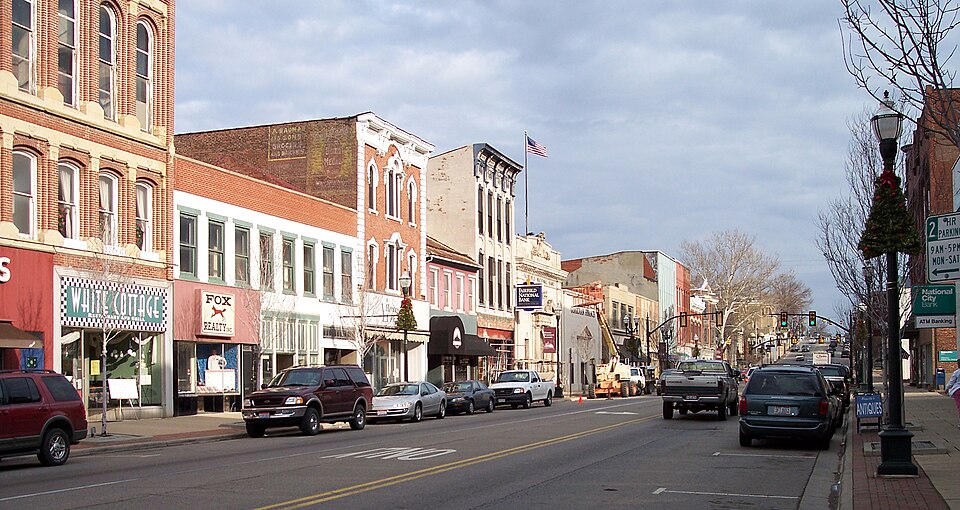
Lancaster (locally LANK (ə )stər) is a city in Fairfield County, Ohio, and its county seat. The population was 40,552 at the 2020 United States census, making it Ohio’s 30th largest city, having surpassed Warren and Findlay due to its own growth while the latter two cities declined. The city is near the Hocking River in the south central part of the state, about 33 miles (53 km) southeast of Columbus and 38 miles (61 km) southwest of Zanesville. It is part of the Columbus metropolitan area.
At a Glance
- County: Fairfield County
- County seat of Fairfield County
- State: Ohio
History of Lancaster
The earliest known inhabitants of the southeastern and central Ohio region were the Hopewell, Adena, and Fort Ancient Native Americans, of whom little evidence survived, beyond the burial and ceremonial mounds built throughout the Ohio and Mississippi Valleys. Many mounds and burial sites have also yielded archaeological artifacts. Serpent Mound and Hopewell Culture National Historical Park, though not in Fairfield County, are nearby.
Before and immediately after European settlement, the land today comprising Lancaster and Fairfield County was inhabited by the Shawnee, nations of the Iroquois, Wyandot, and other Native American tribes. It served as a natural crossroads for the inter and intra tribal wars fought at various times. Frontier explorer Christopher Gist reached Lancaster’s vicinity on January 19, 1751, when he visited the small Delaware town of Hockhocking nearby. Leaving the area the next day, Gist rode southwest to Maguck, another Delaware town near Circleville.
Having been ceded to the United States by Great Britain after the American Revolution in the Treaty of Paris, the lands north of the Ohio River and west of the Appalachian Mountains were incorporated into the Northwest Territory in 1787. White settlers began to encroach on Native American lands in the Northwest Territory. As the new United States government began to cast its eye westward, the stage was set for the series of campaigns that culminated in the Battle of Fallen Timbers in 1794 and the Treaty of Greenville in 1795. With pioneer settlement within Ohio made legal and safe from Indian raids, developers began to speculate in land sales in earnest.
Text adapted from the Wikipedia article Lancaster, Ohio, available under the CC BY-SA 4.0 license.