
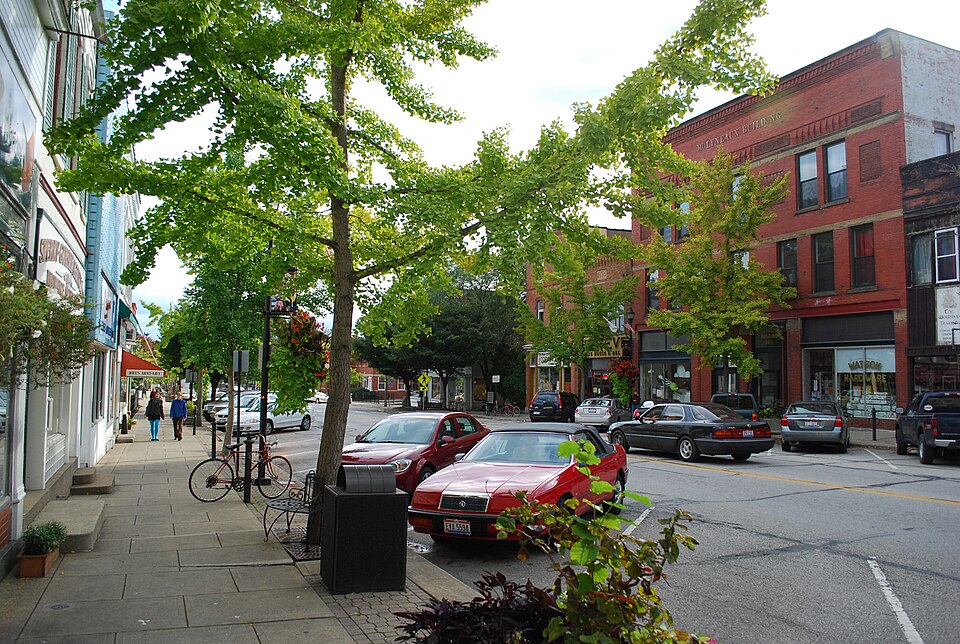
Oberlin is a city in Lorain County, Ohio, United States. It is located about 31 miles (50 km) southwest of Cleveland within the Cleveland metropolitan area. The population was 8,555 at the 2020 census. Oberlin is the home of Oberlin College, a liberal arts college and music conservatory with approximately 3,000 students.
The town is the birthplace of the Anti Saloon League and the Hall, Héroult process, the process of reducing aluminum from its fluoride salts by electrolysis, which made industrial production of aluminum possible.
At a Glance
- County: Lorain County
- State: Ohio
History of Oberlin
Oberlin was founded in 1833 by two Presbyterian ministers, John Jay Shipherd and Philo P. Stewart. The pair had become friends while spending the summer of 1832 together in nearby Elyria and discovered a shared dissatisfaction with what they saw as the lack of strong Christian morals among the settlers of the American West. Their proposed solution was to create a religious community that would more closely adhere to Biblical commandments, along with a school for training Christian missionaries who would eventually spread throughout the American frontier. The two decided to name their community after J. F. Oberlin (1740 to 1826), an Alsatian minister whose pedagogical achievements in a poor and remote area had greatly impressed and inspired them.
Shipherd and Stewart rode south from Elyria into the forests that then covered the northern part of Ohio in search of a suitable location for their community. After a journey of approximately eight miles, they stopped to rest and pray in the shade of an elm tree along the forest, and agreed that this would be a good place to start their community.
Text adapted from the Wikipedia article Oberlin, Ohio, available under the CC BY-SA 4.0 license.